
Newel
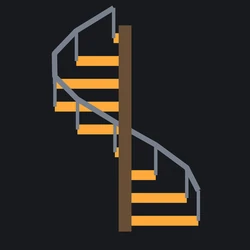
Drag one marker to the floor you are leaving and one to the floor you are reaching. Press Play. Newel builds the stair between them: treads, balusters, a handrail that follows the turn, and a round newel post.
What you get
It lands on your floor exactly. The step count is a ceiling and the rise is your height divided by it — never a chosen rise dividing your height, which is what leaves a short last step to trip on.
How it holds up
A 7.3-stud floor is met at 7.300000000. It refuses what you cannot walk, with the number: a step taller than you allow, a tread measured where you WALK rather than at the post, and headroom under the turn above.
What it does not do
With the turn fixed, headroom is 2*pi*height/turn, so widening cannot fix it and Newel says so instead of building something you walk into. Radius, rise, tread, headroom and direction are one table.
The listing, word for word
Two floors. One spiral staircase that must land exactly—not almost. Newel builds it between Base and Top markers: treads, balusters, handrail and newel post.
DRAG BASE + TOP. PRESS PLAY. Newel chooses the step count from your maximum rise, then divides the floor height into identical steps. No short last tread to trip on.
BUILT TO WALK. Set radius, maximum rise, minimum walking tread, headroom, turns and direction in one table. Tread is measured where a character walks—not beside the post where every spiral is narrow.
IT REFUSES BAD GEOMETRY WITH THE NUMBER. A 4-turn stair climbing 24 studs has 6.00 studs of headroom below a 6.20 minimum, so Newel refuses it and reports the 24.8 studs required. Making it wider cannot hide fixed-sweep headroom.
PROVEN: a 24-stud floor becomes 12 identical 2.000-stud rises, 2.40-stud walking tread and 30.5-stud headroom. A 7.3-stud target lands at 7.300000000.
Ordinary anchored Parts. No runtime dependency or network. Move the markers and rebuild.